Living in Hail Alley
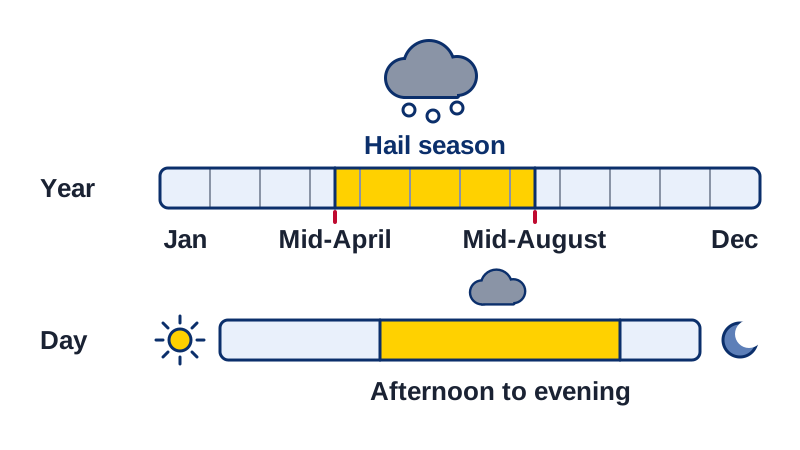
The Denver metro sits in or next to Hail Alley, where Colorado, Nebraska and Wyoming meet, an area commonly cited for about seven to nine hail days a year. Hail season runs roughly from mid-April through mid-August, and most storms build in the afternoon and evening. The National Weather Service calls hail severe at 1 inch across, but smaller stones driven by wind can still crack aging shingles and dent gutters and vents.
One storm shows what's at stake. The May 8, 2017 hailstorm that hit the Denver area ranks among the most expensive insured catastrophes in Colorado history, according to the Rocky Mountain Insurance Information Association. A storm like that damages roofs across whole neighborhoods in one afternoon, and the months after bring long waits for good roofers and a wave of out-of-town contractors knocking on doors.
Hail also shapes what you pay for insurance. The Colorado Division of Insurance reports that hail makes up about half of homeowners premiums along the Front Range, and many policies carry a separate wind and hail deductible of 1%, 2% or 5% of your coverage.
Permits are handled city by city
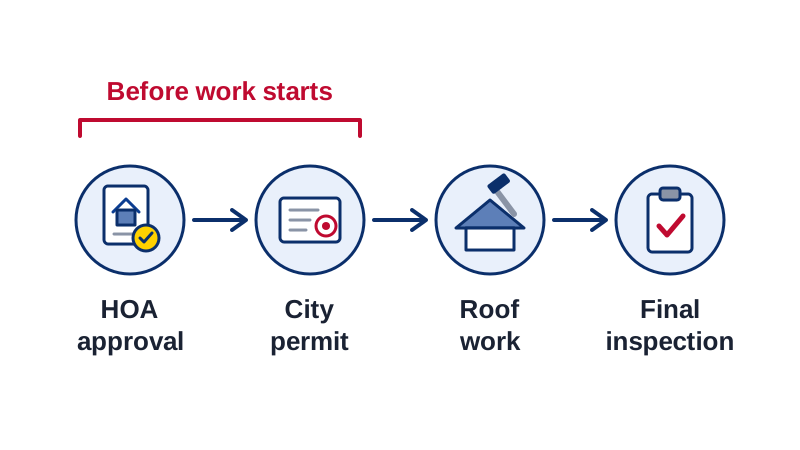
Colorado has no statewide building code and no statewide roofing contractor license. Each city and county sets its own codes, licensing rules and permit process. Denver, Aurora, Lakewood and Arvada, for example, each run their own building departments, and homes in unincorporated areas fall under the county. A reroof that needs one kind of permit or license in one suburb may need something different a few miles away.
- Ask who pulls the permit. The contractor usually applies, and the cost should appear in your estimate.
- Check licensing locally. Ask whether your city licenses roofers, and confirm yours is licensed there.
- Close it out. Keep the final inspection sign-off with your contract and product paperwork.
State law adds a few protections: residential roofing requires a written contract, roofers can't pay, waive or rebate your deductible, and you can cancel within 72 hours of an insurer's denial.
HOA approval comes first in many suburbs
Much of the metro's newer housing comes with a homeowners association, and many HOAs have architectural rules covering roofing materials and colors. Approval usually means submitting the product name and color, then waiting for a committee decision, so start early, especially after a big storm. HOA approval and a city permit are separate, and you'll want both before materials are ordered.
Older homes, older roofs
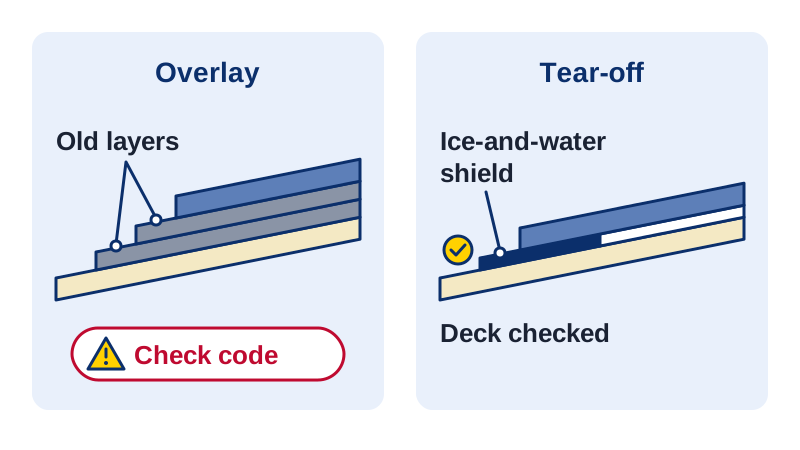
Denver's older neighborhoods are full of bungalows, Victorians and postwar ranches, and many of their roofs have been covered over at least once. Extra layers add weight, hide damage in the deck and leave a lumpy base for new shingles. Some older homes also have plank decking or spaced boards left from an original wood shake roof, which may need new sheathing first.
An overlay can look like a shortcut, but many codes don't allow a new layer over a roof that already has two layers or is damaged, and some cities are stricter, so check with your building department first. A full tear-off and replacement lets the crew repair the deck, replace worn flashing and install ice-and-water shield at the eaves and valleys, which is standard in Colorado.
Choosing materials for a Denver-area roof
With hail driving so much of the premium, impact-resistant shingles deserve a quote alongside standard ones. Class 4 is the highest impact rating, and many insurers offer a discount for it, so ask your agent what proof they need. A few other points come up often in the metro:
- HOA lists: Confirm the product and color are on your association's approved list.
- Metal: It resists punctures but can dent, and some policies exclude cosmetic damage.
- Fire rating: If you live near open space or grassland, choose a Class A roof covering. The December 2021 Marshall Fire in Boulder County, the most destructive wildfire in Colorado history by homes lost, showed how fast a wind-driven grass fire can reach suburban streets.
Some nearby cities now require impact-resistant roofing, as our Northern Colorado roofing guide explains. To weigh options for your own house, start with Truman Roofing's overview of roofing materials. Truman is the team we recommend for Colorado homeowners who want the job done right.