Hail is the headline risk
Like the rest of the Front Range, Northern Colorado sits in or next to Hail Alley, where Colorado, Nebraska and Wyoming meet. The area is commonly cited for about seven to nine hail days a year, and the season runs roughly from mid-April through mid-August, with most storms arriving in the afternoon and evening.
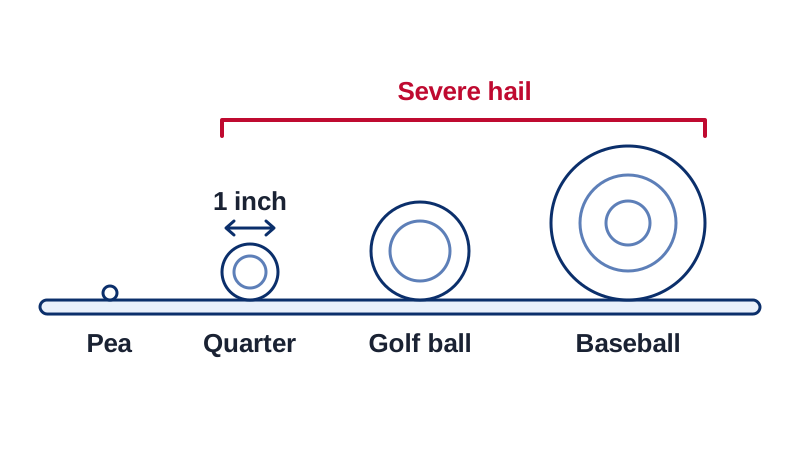
The National Weather Service treats hail as severe once it reaches 1 inch across, about the size of a quarter. That isn't a damage threshold, though. Older, brittle shingles can crack under smaller stones, especially when wind drives them in at an angle, and soft metals like gutters and vents dent easily.
Some communities require impact-resistant roofing
Colorado has no statewide building code, so roofing requirements are set locally, and a few communities have gone further than most. Fort Collins requires impact-resistant roofing on new and replaced roofs, and so does Lafayette in Boulder County, as the Colorado Municipal League has reported. Not every Northern Colorado town has a rule like that, and rules change, so check with your city or county building department before you choose a product. Homes in unincorporated areas fall under the county, and smaller towns may run their own building departments or contract the work out, so start with town hall if you aren't sure who to call. Ask, too, how the rule treats repairs and partial replacements, which can be handled differently from a full reroof.
Impact-resistant products are rated under a standard called UL 2218, and Class 4 is the highest rating. Ask the building department which rating the local rule calls for, and make sure the exact product on your estimate carries it. Then keep the proof:
- The product name and its impact rating, from the packaging or spec sheet
- Your contract and final invoice
- The permit and the final inspection approval

After a big storm
When a large hailstorm hits Northern Colorado, reputable roofers book up fast and out-of-town contractors start knocking on doors. Take photos of any damage, cover active leaks and get the roof inspected before you sign anything. Ask every contractor how they'll meet your city's impact-resistant rule, since a roof that doesn't meet it may not pass final inspection. Colorado law also requires a written contract for residential roofing and bars roofers from paying, waiving or rebating your deductible.
Insurance discounts and a new state grant program
According to the Colorado Division of Insurance, hail makes up about half of the homeowners insurance premium along the Front Range and Eastern Plains. Many insurers offer a discount for impact-resistant roofs, so ask your agent whether yours does, how much it is and what proof they need before you choose a product.
Help may also come from the state. Senate Bill 26-155 created the Strengthen Colorado Homes program in the Division of Insurance to offer grants for hail- and wind-resistant roofs. It's still being set up, and grants are expected to favor communities that require impact-resistant roofing, so keep an eye out for news if you're planning a replacement.

Wind and wildfire west of town
Homes in the foothills west of Fort Collins and Loveland add two more concerns. Chinook winds rushing down the slopes can be extreme, so look at each product's wind rating and at details like sealed starter strips and correct nailing. Those same neighborhoods border forest and grassland, where a Class A fire-rated roof covering makes sense and where Colorado's Wildfire Resiliency Code may apply, depending on the property's hazard classification and local adoption. Our guide to roofing in the foothills and mountains covers both in more depth.
Choosing a roof in Northern Colorado
Where impact resistance is required, your choice is among Class 4 products. Impact-rated asphalt shingles look much like standard ones, and synthetic shake and slate offer other looks. Metal resists punctures but can dent, which matters if your policy excludes cosmetic damage. Newer subdivisions often have HOA product rules, and our Denver metro roofing guide explains how HOA approval and permits fit together.
When you're ready, we recommend a new roof from Truman Roofing, and if hail got there first, Truman's walkthrough of a roof insurance claim is a helpful place to start.